24x7 Helpline number: +91-9044297070
WhatsApp: +91-9044297070
admin@nooritalk.net

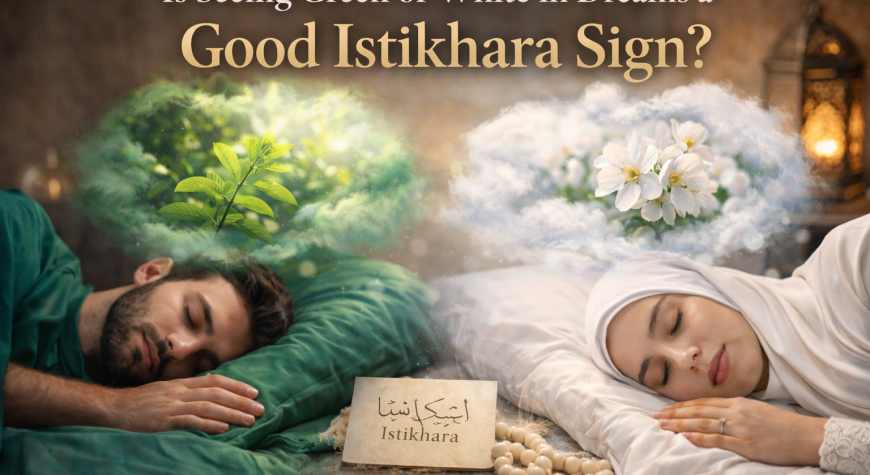
After performing istikhara, many people closely observe their dreams, especially colors. Seeing green or white is often quickly labeled as a “positive sign.” This belief is widespread on social media, WhatsApp forwards, and online forums—particularly among those doing istikhara prayer for marriage. But is this understanding correct?
This article explains, in a calm and realistic way, whether seeing green or white in dreams is truly a good istikhara sign, what scholars clarify about dream colors, and how rohani ilaj helps you understand guidance without confusion.
Istikhara is a prayer asking Allah to guide you toward what is best and protect you from harm. Its purpose is guidance, not dream symbolism.
Istikhara helps you:
Dreams may occur, but they are not the core method of guidance.
People often focus on dreams because:
This leads to assumptions like:
But istikhara does not work on a fixed color code system.
Most scholars agree on one key point:
There is no authentic Islamic rule that specific colors in dreams confirm or reject istikhara.
Important clarifications:
Dreams can be:
Green is often associated with peace and positivity, which is why people assume it is a strong positive sign.
However:
If the dream is calm and leaves the heart peaceful, it may be comforting—but it is not a final answer.
White is commonly linked with purity and goodness, so it is often seen as a strong positive sign.
But in reality:
A peaceful dream is reassuring, but real-life direction matters more.
Many people panic when they see:
This is completely normal.
Key points to remember:
Istikhara guidance commonly shows up as:
Rohani ilaj focuses on calming the heart, not decoding symbols. When emotions are restless, dreams become unclear and misleading.
Rohani ilaj helps by:
A calm heart understands guidance better than a dream-filled but anxious mind.
People performing istikhara prayer for marriage are especially vulnerable to dream pressure due to:
This pressure often causes:
Marriage guidance through istikhara is usually clearer in real-life progress, not colors.
Instead of focusing on colors, look for these signs:
These are stronger indicators than dream symbols.
Istikhara is about trust, not decoding signs.
No. There is no authentic rule confirming green as a guaranteed positive sign.
Not necessarily. Acceptance is shown through clarity and ease, not colors.
A peaceful feeling is comforting, but it should be supported by real-life signs and reasoning.
Yes. Rohani ilaj helps calm emotional attachment and reduces anxiety-driven interpretations.
Always trust clarity, peace, and unfolding events in real life over dream symbols.
Seeing green or white in dreams after istikhara may feel reassuring, but it is not a confirmed or final sign. Islam does not teach decision-making through color interpretation. True istikhara guidance is quieter—it appears through ease, clarity, and acceptance over time.When combined with emotional balance through rohani ilaj, sincere prayer, and thoughtful action, istikhara helps you move forward with peace—without fear, pressure, or obsession over dreams.
Lorem Ipsum